Text messaging has completely changed the way we communicate. Abbreviations, acronyms, and shorthand phrases dominate our conversations.
One abbreviation that has sparked curiosity recently is TMP.
Whether you stumbled upon it in a chat, a meme, or a social media comment, understanding its meaning is crucial to avoid confusion.
In this comprehensive guide, we’ll explore everything about TMP, its uses, origins, and context in 2025.
What Does TMP Mean? (Primary and Secondary Meanings)
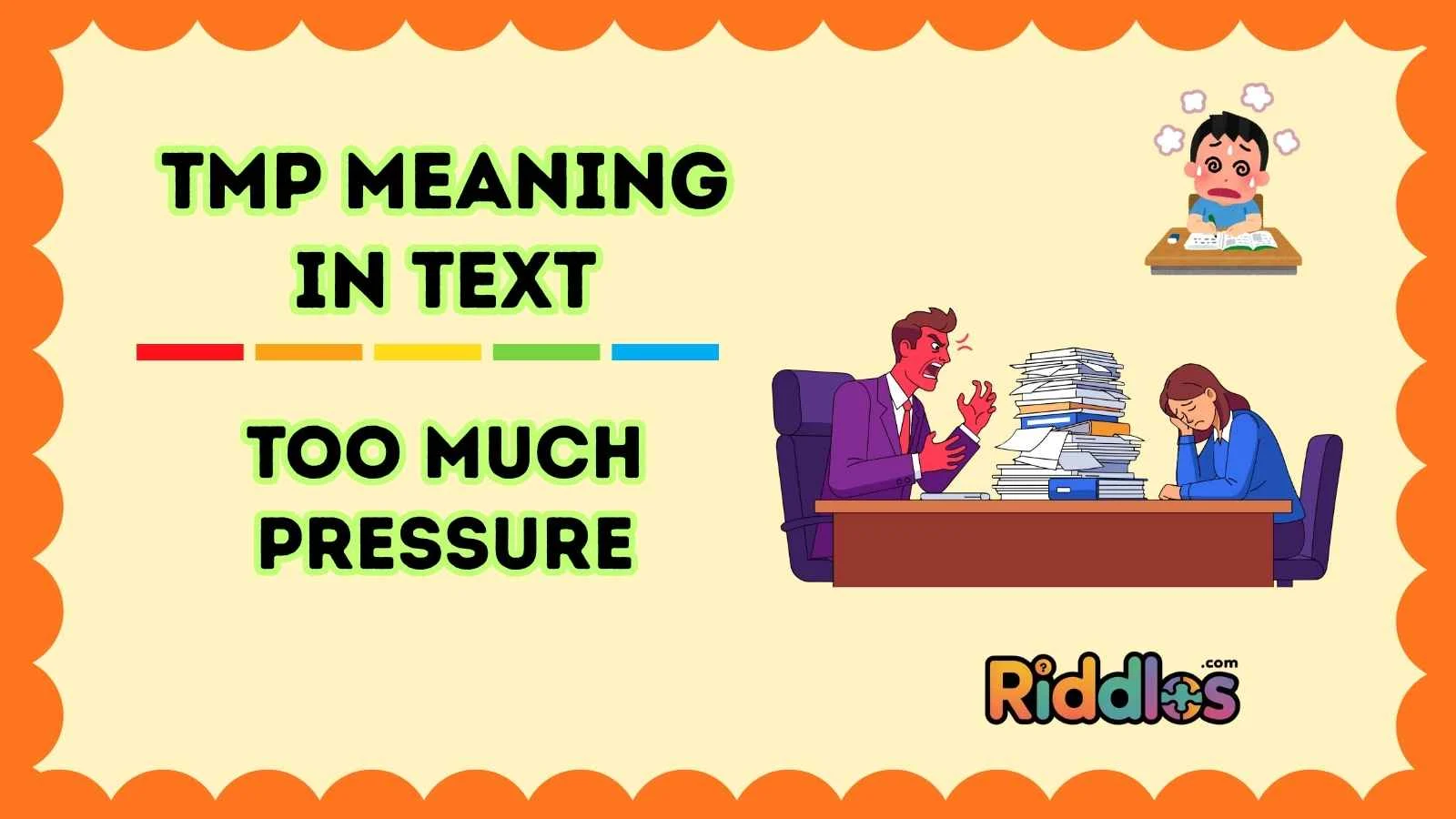
TMP is an abbreviation that stands for “Too Much Pressure” in most texting contexts. However, like many online slang terms, it can have multiple meanings depending on the platform or community.
- Primary Meaning: Too Much Pressure
- Secondary Meanings:
- Temporary Message Preview – sometimes used in email or chat applications
- The Music Player – rare, in music forums or app discussions
- Team Meeting Point – occasionally used in corporate or gaming chats
The context is everything. If someone texts “Feeling TMP today”, they likely mean they are overwhelmed or stressed. Conversely, in gaming chats, it could refer to a location or term relevant to the game.
Tip: Always analyze the conversation to determine which meaning fits best. Misreading TMP can lead to awkward responses.
Where TMP Came From (Origin + Early Usage)
Abbreviations like TMP emerge from the digital need for speed. People wanted to communicate emotions and ideas quickly without typing entire sentences.
- Early Text Messaging: TMP was used in SMS conversations during the late 2000s as shorthand for stress or pressure.
- Online Forums: By 2015, TMP appeared on Reddit, Discord, and early social media platforms. Users often abbreviated feelings to fit character limits.
- Gaming Culture: Competitive games with fast chats led to TMP being used as shorthand for urgent situations or in-game pressure.
Fun Fact: Many abbreviations like TMP started in teen group chats and slowly spread into mainstream social media platforms.
How People Use TMP in Real Conversations
TMP isn’t just a word; it’s a context-driven abbreviation. Let’s break down how it’s used in texting, social media, and gaming.
TMP in Texting
Texting is the most personal and casual environment for TMP. It’s usually used to convey stress, pressure, or emotional overwhelm.
Example sentences:
- “I’ve got three exams tomorrow, TMP 😩”
- “TMP with all these deadlines, can’t even think straight”
People also use TMP as a playful exaggeration in friendly conversations:
- “TMP trying to finish all this pizza alone!”
TMP in Social Media
On social media platforms, TMP often conveys dramatic emphasis or relatability. Users tend to post TMP in response to trending challenges, viral posts, or personal struggles.
- Instagram captions: “TMP after seeing my inbox 😭”
- TikTok comments: “TMP, this video is hilarious 😂”
- Twitter threads: Users reply with TMP to express being overwhelmed by news, memes, or opinions
Observation: Social media has amplified TMP usage by connecting different age groups and making shorthand more mainstream.
TMP in Gaming Chats
Gaming culture thrives on brevity. Players often type TMP when reacting to high-pressure scenarios or coordinating strategies.
Examples:
- “TMP at the final boss, need backup!”
- “TMP, respawn’s in 10 seconds”
Some games have even adopted TMP in official forums to describe tense gameplay moments.
Pro Tip: Gamers often combine TMP with emojis or other abbreviations like BRB (Be Right Back) or GG (Good Game) to speed up communication.
Sentence Examples of TMP in Natural Conversations
Here’s a handy table showing TMP in real-life contexts:
| Context | Example Text | Meaning |
|---|---|---|
| Friend chat | “TMP, can’t handle all these group projects” | Too Much Pressure |
| Social media | “TMP at all the drama in this thread 😬” | Overwhelmed / Shocked |
| Gaming chat | “TMP at the final round, need reinforcements” | Intense Pressure / Stress |
| Work chat | “TMP with all these emails today” | Feeling stressed |
| Humorous use | “TMP eating three slices of cake alone” | Playful exaggeration |
These examples show how TMP adapts based on context, tone, and audience.
Misunderstandings People Have About TMP
TMP can be misinterpreted easily if you’re unaware of context. Some common misconceptions:
- TMP = Time Management Problem – Occasionally assumed in corporate chats but uncommon in texting
- TMP = The Most Popular – Misused in social media due to guessing trends
- TMP = Temporary Message Preview – True technically, but rarely used outside tech-savvy circles
Advice: When in doubt, ask the sender or infer meaning based on surrounding messages. Misreading TMP can lead to confusion or awkward replies.
TMP vs. Similar Slang and Abbreviations
Online communication has dozens of abbreviations overlapping in meaning. Here’s a quick comparison table:
| Abbreviation | Meaning | Difference from TMP |
|---|---|---|
| OMG | Oh My God | Expresses surprise rather than stress |
| FML | F*** My Life | Stronger negative emotion than TMP |
| SMH | Shaking My Head | Indicates disapproval, not pressure |
| BRB | Be Right Back | Neutral, not emotional |
| TLDR | Too Long; Didn’t Read | Summary note, not emotion-based |
TMP’s unique advantage is its versatility in casual and emotional contexts.
How to Reply When Someone Sends TMP
Knowing what TMP means is only half the battle. Responding correctly shows awareness and empathy.
Polite Replies
- “Take it easy, you’ll handle it!”
- “Sounds tough, hope things get better soon”
Casual/Friendly Replies
- “Hang in there 😅”
- “Same, I feel TMP too!”
Humorous Replies
- “TMP? Let’s escape with pizza 🍕”
- “I vote for nap therapy 💤”
When to Avoid Replying
- Formal conversations
- Work emails where clarity matters
- Situations where TMP could confuse the recipient
Professional & Formal Settings: Should You Use TMP?
Using TMP in professional communication can be tricky.
- Why it can feel informal: TMP is slang-heavy and might seem unprofessional in emails or business chats
- Work-safe alternatives: “I’m feeling overwhelmed,” “This is stressful,” or “High workload today”
- When it’s okay: Internal chat with colleagues familiar with texting slang or in casual corporate Slack threads
Insight: In professional settings, clarity always beats trendiness.
Regional, Age, and Cultural Variations
TMP meaning shifts depending on location, age group, and culture:
- US and UK: Commonly used to express stress or emotional overwhelm
- Gen Z vs. Millennials: Gen Z uses TMP more casually with humor; Millennials lean toward serious expressions
- Non-English speaking countries: TMP might be misunderstood without context, often replaced with local abbreviations
Tip: Always consider your audience when sending TMP to avoid miscommunication.
FAQs:
What does TMP stand for in text messaging?
Answer: TMP usually stands for Too Much Pressure, indicating stress or overwhelm.
Is TMP appropriate for work emails?
Answer: Not really. Use clear phrases like “I’m feeling overwhelmed” instead.
Can TMP have different meanings in gaming?
Answer: Yes, it can refer to tense in-game situations or locations depending on the game.
How can I respond to TMP in a friend chat?
Answer: Use casual replies like “Hang in there” or playful humor like “TMP? Let’s grab pizza.”
Is TMP used internationally?
Answer: Mostly in English-speaking regions. Non-English speakers might misinterpret it unless context is clear.
Conclusion:
Understanding TMP goes beyond memorizing an acronym. It reflects digital communication’s speed, context-driven nature, and the importance of emotional nuance in texting, social media, and gaming.
By knowing what TMP means, where it came from, and how to use it appropriately, you can communicate more clearly, avoid misunderstandings, and even connect more effectively with your friends, followers, or teammates.
Next time you see TMP, you’ll know exactly what it conveys—whether it’s a playful exaggeration, a serious expression of stress, or a gaming alert.