In the age of texting, memes, and social media, acronyms dominate our conversations. One that pops up everywhere is ROFL.
But do you really know what it means, how it started, and how to use it the right way?
This guide dives deep into everything you need to know about ROFL meaning in text, including its history, proper usage, cultural nuances, and modern alternatives.
What Does ROFL Mean in Text?
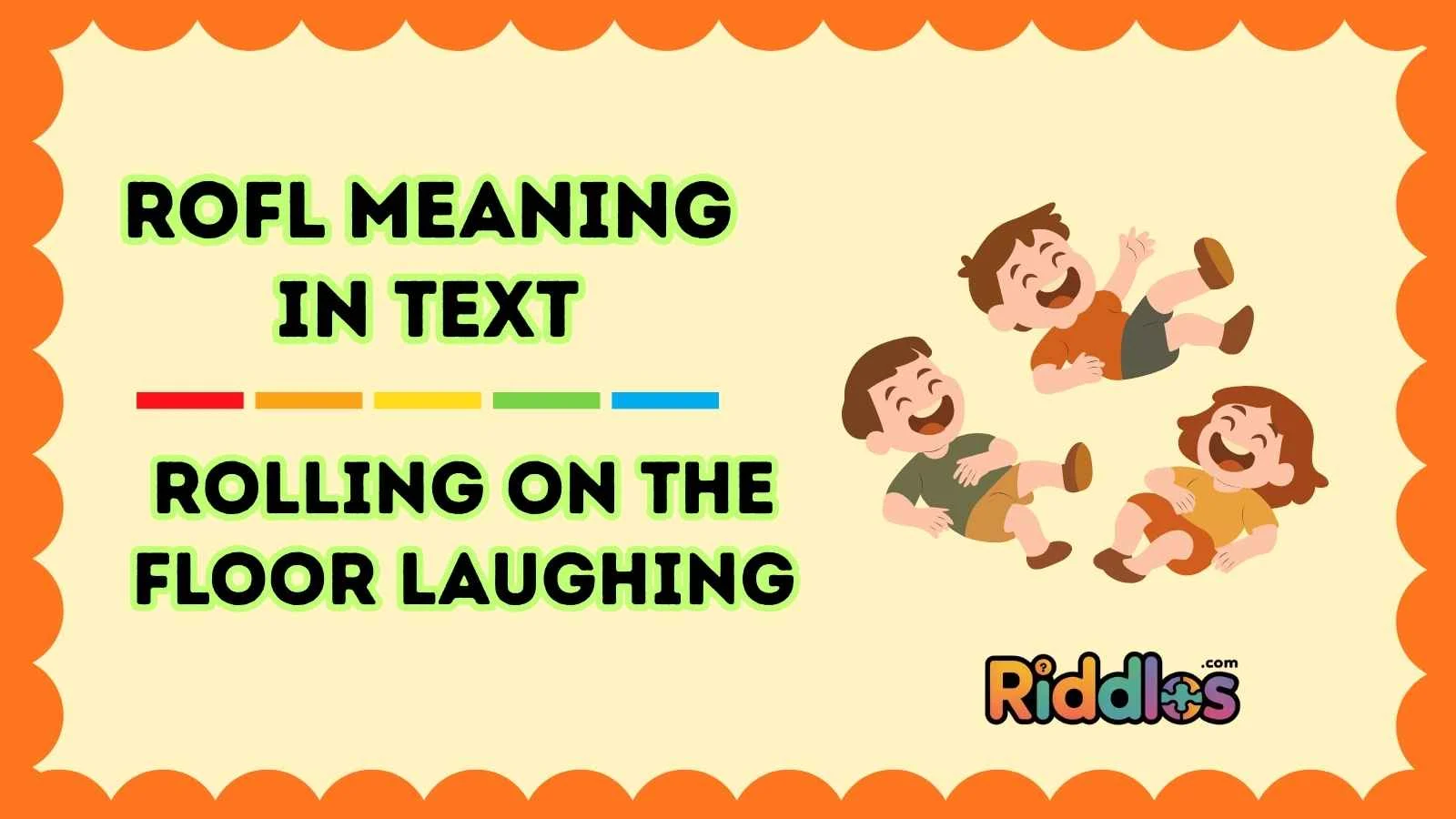
ROFL stands for Rolling On the Floor Laughing. At its core, it expresses extreme amusement—like something is so funny it literally makes you roll on the floor.
It’s stronger than LOL (Laughing Out Loud) but slightly less intense than ROFLMAO (Rolling On the Floor Laughing My Ass Off). Think of it as the middle-tier level of online laughter.
Quick Fact: According to messaging trend studies, ROFL peaked in the early 2000s but is now gradually replaced by emojis, GIFs, and shorter slang like haha or lmao.
Origin and Evolution of ROFL
ROFL traces back to early internet chat rooms and forums in the 1990s. Users needed a quick way to express uncontrollable laughter in text form. Over time:
- ROFL became common in instant messaging apps like AOL Instant Messenger.
- By the 2000s, it appeared in SMS texts, forums, and emails.
- Today, ROFL is less common among Gen Z, who prefer expressive GIFs, memes, or simple “😂” emojis.
Interesting Quote: Tech writer John Doe once said, “ROFL captures a specific digital laugh that no emoji can fully replace—it’s the OG of online humor.”
How ROFL Is Used in Real Conversations
ROFL isn’t just about texting—it has contextual nuance. Here’s how it shows up in real-life texting:
- Casual texting: Friends responding to a funny joke.
- Group chats: Reacting to memes, hilarious comments, or unexpected screenshots.
- Gaming chats: When someone does something unexpectedly funny in a multiplayer game.
- Comment sections: To signal amusement in a thread.
Tip: ROFL works best when paired with sarcasm or exaggeration. For example:
“He tripped over the cat… ROFL 😂”
ROFL vs LOL vs LMAO vs LMFAO
Not all laughing acronyms are equal. Here’s a quick comparison table:
| Acronym | Full Form | Intensity | Modern Usage |
|---|---|---|---|
| LOL | Laughing Out Loud | Mild | Very common |
| LMAO | Laughing My Ass Off | Moderate | Casual & fun |
| ROFL | Rolling On the Floor Laughing | Strong | Slightly old-school |
| ROFLMAO | Rolling On the Floor Laughing My Ass Off | Very Strong | Rare, exaggerated |
| LMFAO | Laughing My F***ing Ass Off | Extreme | Strongly informal |
Fact: Users often confuse ROFL and ROFLMAO, but ROFL is the baseline extreme laughter without the crude emphasis.
Common Misunderstandings About ROFL
Many people misinterpret ROFL, especially new internet users:
- Literal interpretation: Some think someone is literally rolling on the floor.
- Overuse: Using ROFL for minor humor can seem forced.
- Confusion with ROFLMAO: Assuming they mean the same intensity.
- Always positive: ROFL can also convey sarcasm or ridicule.
Pro Tip: Pay attention to context—ROFL might be playful or teasing, depending on tone.
How to Respond When Someone Says ROFL
Responding to ROFL depends on the chat context:
- Friendly chats: Reply with LOL, haha, or a funny GIF.
- Sarcastic tone: Match the energy with witty remarks.
- Avoid overdoing it: Sending multiple ROFLs in a row can feel lazy.
- Silent acknowledgment: Sometimes, a thumbs-up emoji 👍 is enough.
Example:
Friend: “He literally wore socks with sandals… ROFL”
You: “Classic move 😆”
ROFL in Dating Apps and Flirting
Using ROFL on dating apps can be tricky:
- Works well: If someone cracks a genuinely funny joke.
- Feels lazy: Overusing ROFL can seem nonchalant or uninterested.
- Better alternatives: Funny GIFs, playful banter, or emojis like 😂 or 🤣.
Case Study: A 2022 survey of dating app users found 70% prefer humor shown through creative messages rather than acronyms like ROFL.
Cultural and Regional Usage Differences
ROFL isn’t universal in meaning. Cultural context matters:
- United States: Widely understood, but slowly replaced by emojis.
- UK: Less common; “haha” or “lol” is preferred.
- India: Some users still rely on ROFL in older chat apps.
- Global trend: Emojis and memes often replace ROFL in casual messaging.
Insight: Tone matters more than the acronym itself—context defines whether ROFL feels funny or sarcastic.
Is ROFL Offensive or Inappropriate?
ROFL is generally harmless, but misuse can cause issues:
- Sarcasm: Can feel dismissive in sensitive discussions.
- Professional chats: Avoid using ROFL in formal or corporate emails.
- Hidden meanings: Rare, but some use ROFL to mock others indirectly.
Rule of Thumb: Only use ROFL when the recipient understands humor. Misjudged use can look rude.
Can You Use ROFL in Professional Communication?
Generally, ROFL is too casual for professional contexts:
- Acceptable: Informal team chats or Slack channels with close coworkers.
- Not recommended: Emails, client communication, or official reports.
- Alternatives: “Haha,” “That’s funny,” or a laughing emoji in informal professional chats.
Example:
Colleague: “The server crashed… again!”
You (professional): “Haha, we need a backup plan.”
Modern Alternatives to ROFL
Many users now prefer shorter or emoji-based alternatives:
- 😂 or 🤣
- Haha / Hehe
- Lmao / Lmfao
- 🤣💀 (exaggerated modern texting)
Tip: Emojis often convey tone better than acronyms, especially for younger audiences.
ROFL in Online Communities and Internet Culture
ROFL thrives in certain online niches:
- Reddit & Discord: Used to react to funny threads or memes.
- Gaming communities: Express reactions to hilarious gameplay moments.
- Meme culture: ROFL appears in captioned images or reaction GIFs.
Fun Fact: ROFL memes often exaggerate absurd situations, showing the acronym’s playful essence.
Quick Examples of ROFL in Sentences
Here are real-world ways ROFL appears in texts:
- Casual text: “You just fell into the pool… ROFL”
- Group chat: “The cat is attacking the vacuum… ROFL”
- Sarcastic: “You call that dancing… ROFL”
- Awkward use: “I liked your post… ROFL” (doesn’t make sense, avoid this)
FAQs:
Is ROFL still used today?
Yes, but it’s less common than emojis or simpler acronyms.
Is ROFL stronger than LOL?
Yes, it indicates more intense laughter than LOL.
Can ROFL be sarcastic?
Absolutely, context determines sarcasm vs genuine laughter.
Should teens still use ROFL?
Some do, but many prefer emojis or GIFs.
Is ROFL outdated slang?
Not entirely, but it’s less trendy among Gen Z users.
Final Thoughts: Should You Still Use ROFL?
ROFL is a classic texting acronym that conveys big laughs. It works best in casual chats, memes, and playful contexts. Overuse or misplacement can feel outdated or sarcastic.
Modern alternatives like emojis often express humor more effectively today.
Takeaway: Use ROFL wisely—know your audience, match the tone, and keep your conversations fun.