Language online changes fast. One word that keeps popping up in texts, captions, and comments is quirky. You see it on TikTok bios, X posts, dating apps, and casual chats. But many people still pause and ask:
What does quirky really mean in text?
In 2026, quirky is no longer just a dictionary word. It’s a vibe. It’s a tone. And sometimes, it’s misunderstood.
This guide breaks down the quirky meaning, how it’s used today, why people get it wrong, and how to use it naturally without sounding awkward or outdated.
Why the Slang “Quirky” Matters
Words like quirky shape how people see personality online.
Calling someone quirky can:
- Signal uniqueness
- Add charm to a message
- Soften criticism
- Show playful appreciation
In digital spaces, personality is currency. Quirky helps people describe small, human differences without being harsh.
That’s why it shows up everywhere from memes to dating profiles.
Why People Misunderstand “Quirky”
Many people confuse quirky with:
- Weird
- Awkward
- Random
- Try-hard behavior
Others think it’s always positive or always sarcastic.
The truth is simple:
Quirky depends on context, tone, and intent.
Used right, it’s warm and fun. Used wrong, it can feel dismissive or fake.
What Does “Quirky” Mean?
Simple Definition
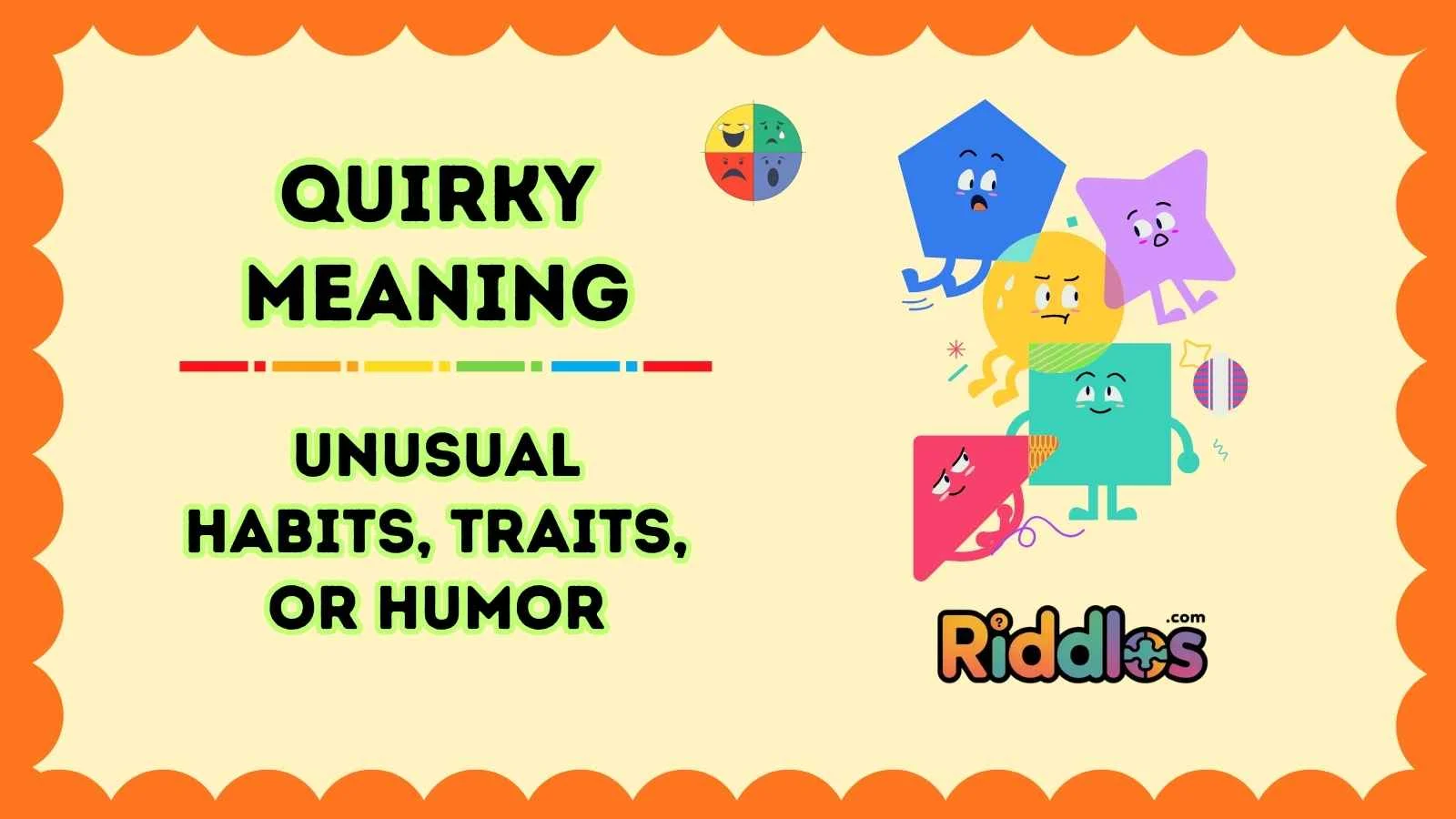
Quirky means having unusual habits, traits, or humor that feel charming, playful, or slightly unexpected.
In text or chat, it often describes:
- A person’s personality
- A comment or joke
- A style or habit
It’s not extreme. It’s subtle.
Origin and Evolution
The word quirky comes from the older English word quirk, meaning a twist or unexpected turn.
Before the internet:
- Quirky was used in books and movies
- Often tied to eccentric characters
Online evolution:
- 2010s: Used lightly to describe “cute weird”
- Early 2020s: Became a personality label
- 2026: Used casually in texts, bios, and comments to signal individuality
Today, it’s more about soft uniqueness, not loud weirdness.
Short TL;DR
Quirky = slightly unusual in a charming, playful, or endearing way.
How to Use “Quirky” in Text and Chat
When to Use It
Use quirky when:
- Describing someone’s harmless habits
- Reacting to a playful message
- Writing casual captions
- Complimenting personality traits
Examples:
- Funny routines
- Unexpected humor
- Light awkwardness that feels human
When to Avoid It
Avoid quirky when:
- Talking about serious behavior
- Addressing emotional issues
- Giving professional feedback
- Describing something offensive
In serious contexts, quirky can sound dismissive.
Tone and Intent
The tone behind quirky is usually:
- Friendly
- Casual
- Light-hearted
- Slightly amused
It’s rarely aggressive or formal.
If the message feels warm, quirky fits.
Common Contexts
Texting
- Friends
- Dating chats
- Group messages
- Captions
- Comments
- Bios
Discord
- Personality descriptions
- Inside jokes
Gaming
- Player behavior
- Funny habits
Forums
- Self-descriptions
- Casual replies
Real Life Examples
Text Chat Examples
- “That reply was kinda quirky but I liked it.”
- “You’re so quirky when you’re tired.”
- “Why do you always text like that? Quirky energy.”
Social Media Captions
- “Just my quirky little routine.”
- “Living my quirky life.”
- “Quirky thoughts at 2 a.m.”
Funny and Relatable Scenarios
- Someone eats cereal with a fork
“That’s quirky, not judging.” - A friend sends voice notes instead of texts
“Your quirky habits are showing.” - A gamer chooses odd strategies that somehow work
“Quirky playstyle but respect.”
Correct vs Incorrect Usage
Correct
- “She has a quirky sense of humor.”
- “That comment was quirky in a good way.”
Incorrect
- “His serious anxiety is quirky.”
- “That offensive joke is quirky.”
Quirky should never downplay real issues.
Common Mistakes and Misunderstandings
Mistake 1: Using Quirky as an Insult
Some people use quirky to mock others. That changes the meaning.
If the tone feels mean, quirky becomes passive-aggressive.
Mistake 2: Overusing It
Calling everything quirky makes it lose meaning.
Save it for moments that actually feel different or charming.
Mistake 3: Mixing It With “Cringe”
Quirky is not the same as cringe.
Cringe = uncomfortable
Quirky = lightly unexpected and fun
Mistake 4: Using It in Formal Writing
Quirky is casual. It doesn’t belong in:
- Business emails
- Academic work
- Serious discussions
Related Slang and Variations
Similar Terms
- Goofy – more playful, less subtle
- Odd – neutral, sometimes negative
- Eccentric – stronger, more adult
- Random – lacks intention
- Whimsical – creative and dreamy
Platform Specific Usage
TikTok
- Often paired with aesthetics
- Used in bios and captions
- Signals personality branding
X (Twitter)
- Used sarcastically or casually
- Often short and ironic
- Used positively in captions
- Personal brand friendly
Discord
- Describes user behavior or humor
- Inside joke friendly
Optional Internal Link Ideas
- What Does “Cringe” Mean in Text?
- Gen Z Slang Words You Should Know
- Internet Personality Slang Explained
- TikTok Bio Slang Meanings
These help build topical authority.
Freshness: How “Quirky” Is Used in 2026
In 2026, quirky is tied to:
- Soft individuality
- Anti-perfection culture
- Realness over polish
People now prefer:
- Slight awkwardness
- Honest habits
- Imperfect humor
Quirky fits the shift away from over-curated online personas.
You’ll see it in:
- Meme captions
- Dating profiles
- AI-generated humor discussions
- Creator self-descriptions
It signals “I’m not trying too hard.”
FAQs:
What does quirky mean in texting?
It means someone or something is slightly unusual in a fun or charming way.
Is quirky a compliment?
Usually yes, if the tone is friendly.
Can quirky be rude?
Yes, if used sarcastically or dismissively.
Is quirky Gen Z slang?
It’s not new, but Gen Z uses it casually and positively.
Conclusion
Quick Summary
- Quirky means charmingly unusual
- It’s casual, playful, and personality-focused
- Context and tone matter
- It’s popular across texts, social media, and chats in 2026
Used right, quirky adds warmth and personality to conversations.
Used wrong, it can confuse or offend.