Language online moves fast. One word can shift tone, spark laughs, or cause drama in seconds. One such word is irreverent. You’ve probably seen it used to describe jokes, memes, comments, or even people online. But many users still ask:
What does irreverent mean in text?
Is irreverent rude or funny?
Why do people misuse irreverent in chats and captions?
In 2026, as humor becomes sharper and more meme-driven, irreverent is everywhere. It shows up in TikTok comments, X threads, Discord servers, gaming chats, and viral memes.
This guide breaks down the irreverent meaning, how it’s used today, and how to avoid common misunderstandings.
Why the Slang “Irreverent” Matters
Words shape how messages land. Irreverent signals a very specific vibe.
It often tells you:
- A joke crosses boundaries
- A comment ignores authority or tradition
- Humor is bold, sarcastic, or dark
In online culture, irreverent humor is often rewarded with likes and shares. But it can also offend fast if used wrong.
That’s why understanding the irreverent meaning in text matters more than ever.
Why People Misunderstand “Irreverent”
Many people confuse irreverent with:
- Rude
- Mean
- Disrespectful
- Hateful
That’s not always correct.
Irreverent does not automatically mean offensive.
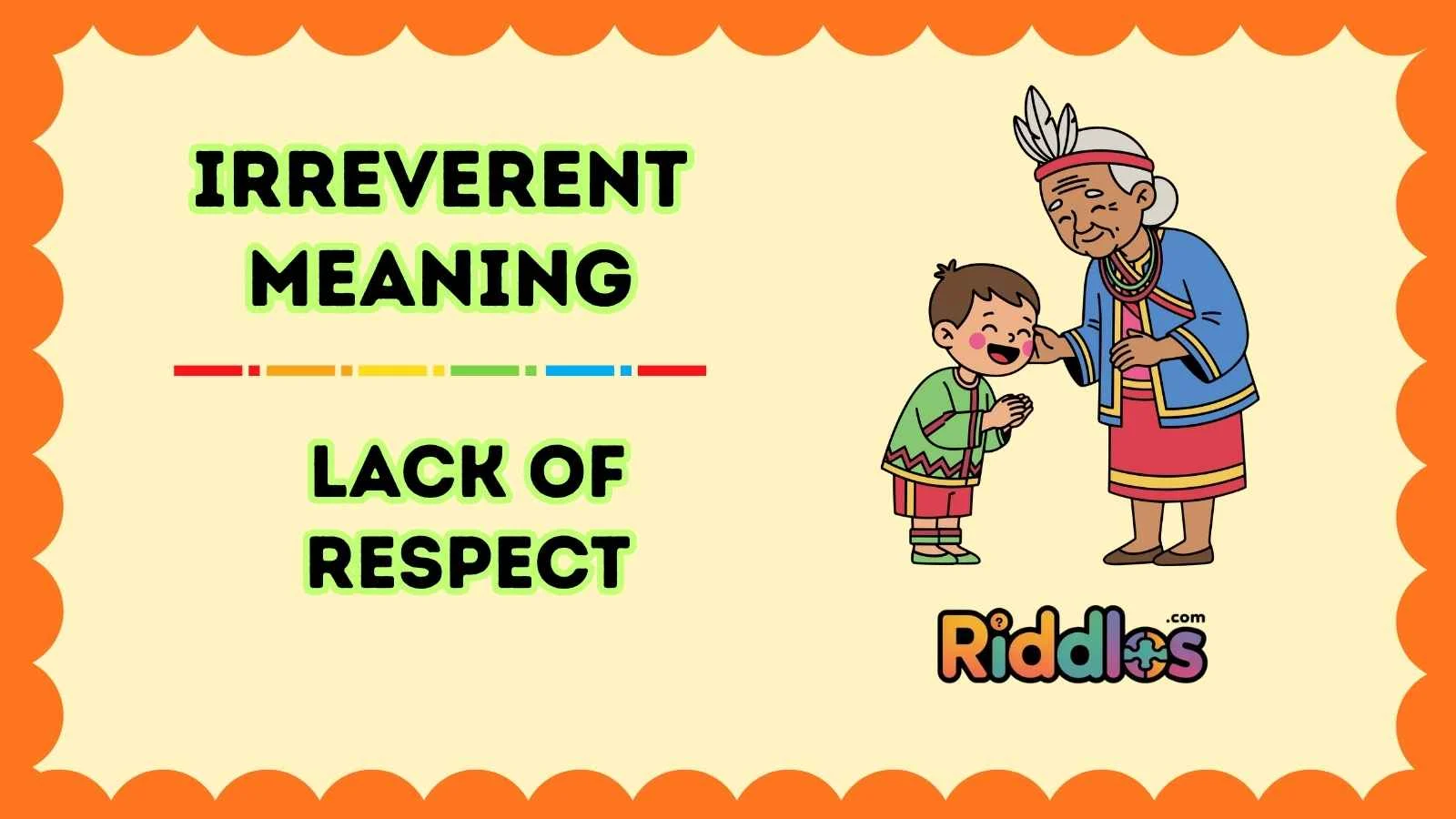
It means not showing proper respect, often on purpose, usually for humor.
The confusion comes from tone. Text removes voice, facial cues, and intent. What’s meant as playful irreverence can sound harsh without context.
What Does “Irreverent” Mean?
✅ Simple Definition
Irreverent means showing a lack of respect for things usually taken seriously, often in a humorous or sarcastic way.
In texting and online slang:
It describes jokes, comments, or attitudes that mock rules, traditions, authority, or sacred ideas.
📜 Origin & Evolution
- Origin: From Latin irreverens meaning “not respectful”
- Traditional use: Formal writing, literature, criticism
- Modern use: Internet slang, meme culture, humor descriptions
Today, irreverent is less formal and more vibe-based. It’s often used as praise for edgy humor.
⚡ Short TL;DR
Irreverent = bold humor that doesn’t care about rules, tradition, or authority.
How to Use “Irreverent” Correctly
When to Use It
Use irreverent when describing:
- Edgy jokes
- Sarcastic memes
- Bold commentary
- Rule-breaking humor
- Playful mockery
Examples:
- “That meme is so irreverent 💀”
- “His humor is wild and irreverent.”
- “The show has an irreverent take on politics.”
When to Avoid It
Avoid using irreverent when:
- Discussing serious trauma
- Talking to formal audiences
- Context demands sensitivity
- Respect is expected
In professional chats, irreverent humor can backfire.
Tone & Intent
Irreverence usually carries:
- Sarcasm
- Playfulness
- Dark humor
- Confidence
- Anti-authority energy
It’s not meant to harm. It’s meant to challenge norms.
Contexts Where “Irreverent” Is Used
📱 Texting
- Describing jokes
- Reacting to humor
- Calling out bold comments
Example:
“Bro your reply was so irreverent 😭”
📸 Social Media (TikTok, X, Instagram)
- Meme captions
- Viral joke descriptions
- Commentary on content creators
Example:
“An irreverent take on dating apps.”
🎮 Gaming & Discord
- Trash talk
- Meme replies
- Roasting friends
Example:
“This server lives on irreverent humor.”
💬 Forums & Reddit
- Describing writing style
- Explaining humor tone
- Content warnings
Example:
“Warning: irreverent jokes ahead.”
Real Life Examples of “Irreverent”
🗨️ Text Chat Examples
- “That joke was irreverent but hilarious.”
- “She has such an irreverent personality.”
- “Low-key irreverent but I laughed.”
📢 Social Caption Examples
- “An irreverent guide to adulting.”
- “Irreverent humor is my coping skill.”
- “This podcast is chaotic and irreverent.”
😂 Funny / Relatable Scenarios
- A friend makes a joke during a serious meeting
→ “That was so irreverent omg.” - A meme mocks work culture
→ “Peak irreverent energy.” - A show roasts politics
→ “I love its irreverent style.”
✅ Correct vs ❌ Incorrect Usage
Correct:
- “The comedian is known for irreverent jokes.”
Incorrect:
- “He apologized in an irreverent way.”
(Wrong. Apologies require respect.)
Common Mistakes & Misunderstandings
🚫 Mistake 1: Thinking irreverent = hateful
Irreverent humor challenges ideas, not people.
🚫 Mistake 2: Using it in formal writing
Emails, reports, or academic writing rarely suit irreverence.
🚫 Mistake 3: Assuming everyone enjoys it
Not all audiences like irreverent humor. Context matters.
🚫 Mistake 4: Confusing it with sarcasm
Sarcasm can be polite. Irreverence intentionally ignores respect.
Related Slang & Variations
🔁 Similar Terms
- Edgy
- Cheeky
- Bold
- Snarky
- Dark humor
- Unfiltered
- Brutal
Each overlaps but irreverent focuses on disrespecting norms.
📍 Platform-Specific Usage
- TikTok: Used to praise creators with bold humor
- X: Describes sharp political or cultural jokes
- Discord: Common in meme-heavy servers
- Reddit: Used as a tone warning
Freshness: 2026 Trends
In recent years:
- Memes lean darker and more ironic
- Anti-authority humor is mainstream
- Irreverent creators grow faster
- Brands even adopt irreverent tones
Irreverent humor is now part of internet identity.
It’s used to:
- Cope with stress
- Mock systems
- Bond through humor
Conclusion
Quick Summary
- Irreverent meaning: Humor that ignores traditional respect
- It’s bold, playful, and sometimes shocking
- Common in memes, texts, and social platforms
- Misunderstood as rude when context is missing
- Powerful when used right, risky when used wrong
Understanding irreverent meaning in text helps you read tone better and communicate smarter online.