Texting has changed the way we communicate. Slang words like “ight” pop up daily in chats, social media, and dating apps.
If you’ve ever seen a message like “Ight, bet” or just “Ight” and wondered what it means, you’re not alone.
This guide dives deep into the real meaning of “ight”, its history, usage, and how to respond like a pro.
What “Ight” Actually Means
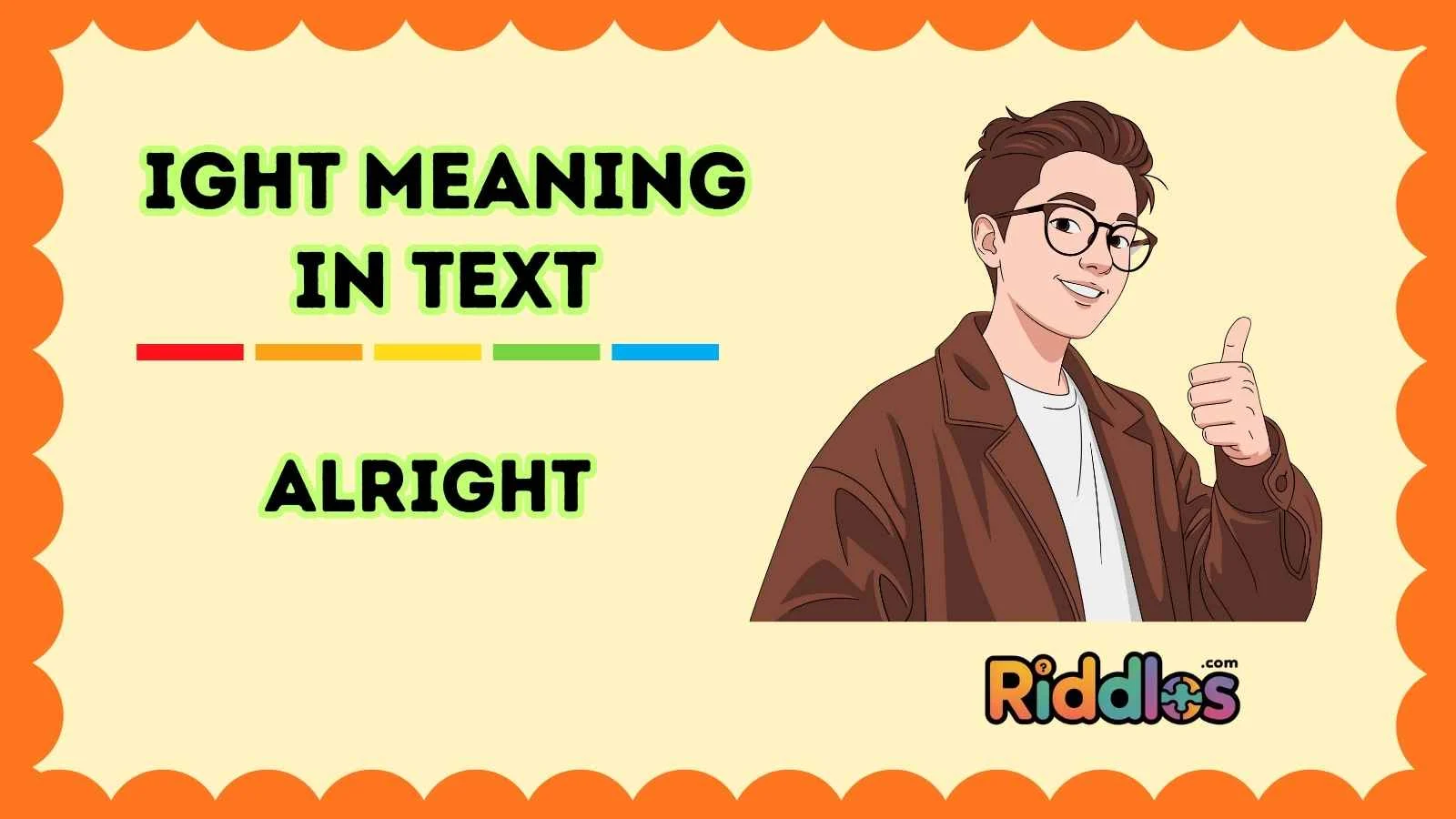
“Ight” is a casual, shortened form of “alright” or “aight.” Texting platforms, social media, and online communities popularized it. It’s versatile and often depends on context.
Core points:
- Indicates agreement or acknowledgment.
- Shows casual tone without over-committing.
- Can express enthusiasm, neutrality, or slight dismissiveness depending on punctuation and context.
Example usage:
- Agreement: “Ight, I’ll meet you at 7.”
- Acknowledgment: “Ight, got it.”
- Confirmation: “Ight, I’m on my way.”
- Neutral/dry: “Ight.”
Background & Evolution of the Term
“Ight” comes from African American Vernacular English (AAVE) and evolved from “aight,” which itself is a shortened form of “alright.”
Timeline of “ight” usage:
| Era | Usage & Context |
|---|---|
| 1990s | Spoken in urban communities, hip-hop songs, casual speech |
| 2000s | Internet forums, texting, early social media slang |
| 2010s | Vine, Snapchat, Twitter adoption; became mainstream |
| 2020s | TikTok, Discord, and gaming chats; Gen Z favorite |
Its rise in popularity is tied to digital communication—faster typing, character limits, and informal online communities.
Fun Fact: Celebrities like Drake and Snoop Dogg have popularized shortened slang, making terms like “ight” mainstream in pop culture.
How “Ight” Is Used in Different Contexts
The meaning of “ight” changes based on tone, punctuation, and context. Here are the main ways people use it:
- Agreement: Signals consent or approval.
- Example: “You coming later?” → “Ight, I’ll be there.”
- Acknowledgment: Shows understanding.
- Example: “Don’t forget the keys.” → “Ight.”
- Confirmation: Assures someone you’re taking action.
- Example: “Pick me up at 6?” → “Ight, see you then.”
- Dismissive or Neutral: Minimal engagement.
- Example: “Ight.” (Sometimes indicates disinterest)
- Playful / Flirty: Casual, friendly tone with hints of humor or teasing.
- Example: “You really think you can beat me at Mario Kart?” → “Ighttt, we’ll see 😏.”
Tone & Meaning Variations Based on Punctuation
Punctuation drastically alters “ight”’s tone.
| Variation | Tone / Meaning |
|---|---|
| Ight | Neutral acknowledgment |
| Ight. | Slightly dismissive or dry |
| Ight? | Questioning or seeking confirmation |
| Ighttt | Enthusiastic, playful, or flirtatious |
| Ight! | Excited or strong agreement |
Common Misconceptions About “Ight”
Many people misinterpret “ight” in texts. Let’s clarify the most common misconceptions:
- Not always annoyed: Sometimes it’s just neutral.
- Not disrespectful: Unless paired with tone or context implying it.
- Not a full commitment: Just agreeing to something casually.
Understanding context is key—tone and relationship dynamics matter more than the word itself.
Similar Terms and Alternatives
People often use slang alternatives for “ight” in texting. Each has subtle differences:
| Term | Meaning / Context |
|---|---|
| Aight | Traditional spelling, casual approval |
| Bet | Strong agreement, sometimes challenges the other person |
| Say less | Implies “I understand” or “I’m on it” |
| Cool | Standard acknowledgment, less casual than “ight” |
| Gotchu | Informal confirmation, supportive tone |
| Alright | Full form, less slangy |
| Fr | “For real,” emphasizing sincerity |
Knowing these helps you choose the right tone in any conversation.
How to Respond to “Ight” (With Scenarios)
Responding to “ight” depends on context. Here’s a practical guide:
- Friendly chat:
Friend: “Ight, I’ll see you later.”
You: “Sounds good 😄.” - Flirty conversation:
Match: “Ighttt, I’m on my way 😉.”
You: “Can’t wait to see you 😏.” - Group texts:
Keep responses short. “Ight, noted” or just “Ight”. - Dry tone:
If “ight.” feels dismissive, consider asking a question to keep the conversation going. - Ending a convo politely:
“Ight, catch you later!” works for friendly closures.
Cultural & Regional Variations
“Ight” is rooted in AAVE but spread globally through social media. Regional variations exist:
- US: Widely used by teens and young adults, casual tone.
- UK: Less common, usually understood through internet culture.
- Global: Seen on TikTok, Discord, and gaming communities worldwide.
Its meaning can shift slightly depending on cultural familiarity with slang.
Usage in Online Communities
- TikTok & Instagram: “Ight” often appears in comments or video captions.
- Snapchat: Quick acknowledgment or casual conversation.
- Discord & Gaming Chats: Signals agreement, readiness, or minimal response.
- Twitter/X Threads: Sometimes humorous or sarcastic.
- Dating Apps (Tinder, Bumble, Hinge): Can indicate casual interest or flirty acknowledgment.
Tip: Tone matters. Emojis often clarify intention in online communities.
Possible Negative or Hidden Meanings
While usually neutral, “ight” can signal:
- Mild annoyance: “Ight, whatever.”
- Emotional distance: A very short reply may indicate lack of interest.
- Dry acknowledgment: Sometimes just a placeholder without enthusiasm.
Case Study: On a dating app, someone sends “Ight.” after you plan a date. The response could mean anything from busy schedule to subtle disinterest. Context and previous interaction patterns clarify meaning.
Professional Communication: Should You Use It?
In most work settings, “ight” is not suitable. Use full words like “Alright” or “Understood.”
- Internal casual chat: Might work if your team uses slang.
- Emails or client messages: Avoid slang for clarity and professionalism.
Rule of thumb: If unsure, skip “ight” in professional contexts.
Comparison With Other Shortened Words
Many shortened words share texting slang space. How does “ight” compare?
| Word | Tone | Usage Notes |
|---|---|---|
| Ion | Casual, means “I don’t” | Often paired with negative statements |
| Fr | Emphasizes sincerity | Can appear with “ight” for agreement |
| Ayo | Attention-grabbing | Often starts a message |
| Bet | Strong agreement | Sometimes challenges |
| Say less | Understanding | Slightly more formal than “ight” |
| Ok bet | Agreement with emphasis | Similar to “ight, bet” |
Understanding these helps you navigate online conversations better.
Social Dynamics: What “Ight” Signals About the Speaker
“Ight” can reveal subtle social cues:
- Casual personality: People who text “ight” often prefer informal communication.
- Relationship closeness: Short replies are usually for friends or acquaintances.
- Generational usage: More common among Gen Z, less so with older Millennials.
Quote: “Language is the road map of a culture. It tells you where its people come from and where they are going.” – Rita Mae Brown
FAQs:
What does “Ight bet” mean?
It usually means strong agreement or confirmation in a casual tone.
Does “Ight” mean someone is mad?
Not always; tone and context matter. Sometimes it’s neutral or casual.
Is “Ight” slang or proper grammar?
Slang. It’s informal and mostly used in texting and online chats.
What’s the difference between “ight” and “aight”?
Both mean the same, but “aight” is slightly older and closer to the original “alright.”
Why do people type extra t’s like “ighttt”?
To add emphasis, enthusiasm, or playful tone.
Conclusion:
“Ight” is more than just a shortcut for “alright.” It carries tone, nuance, and personality in digital communication.
Understanding its variations, usage contexts, and subtle cues helps you respond confidently.
Whether in casual chats, online communities, or dating apps, “ight” shows how language evolves with culture and technology.
Mastering slang like this keeps you in tune with modern conversations while avoiding miscommunication.