Texting slang moves fast. Blink once and a new shortcut takes over your chats. One of the most common, yet oddly confusing, abbreviations is GTG.
You’ve probably seen it in texts, DMs, work chats, gaming lobbies, or dating apps. Sometimes it feels polite.
Other times it feels abrupt. And occasionally, it means the opposite of what you expect.
This guide breaks down GTG meaning in text in a way that actually helps you use it correctly. No fluff. No filler.
Just real examples, clear explanations, and practical advice you can use today.
Why GTG Keeps Showing Up in Text Messages
Slang exists for one main reason. Speed.
People want to say more using fewer characters. That habit started with SMS limits and carried straight into modern messaging apps. GTG fits perfectly into this behavior because it delivers a complete idea in just three letters.
You’ll see GTG everywhere because it:
- Saves time
- Sounds casual
- Works across platforms
- Feels natural in conversation
However, context decides everything. Without it, GTG can feel confusing or even rude.
What Does GTG Mean in Text?
The abbreviation GTG has two widely accepted meanings. Both are correct. Context tells you which one applies.
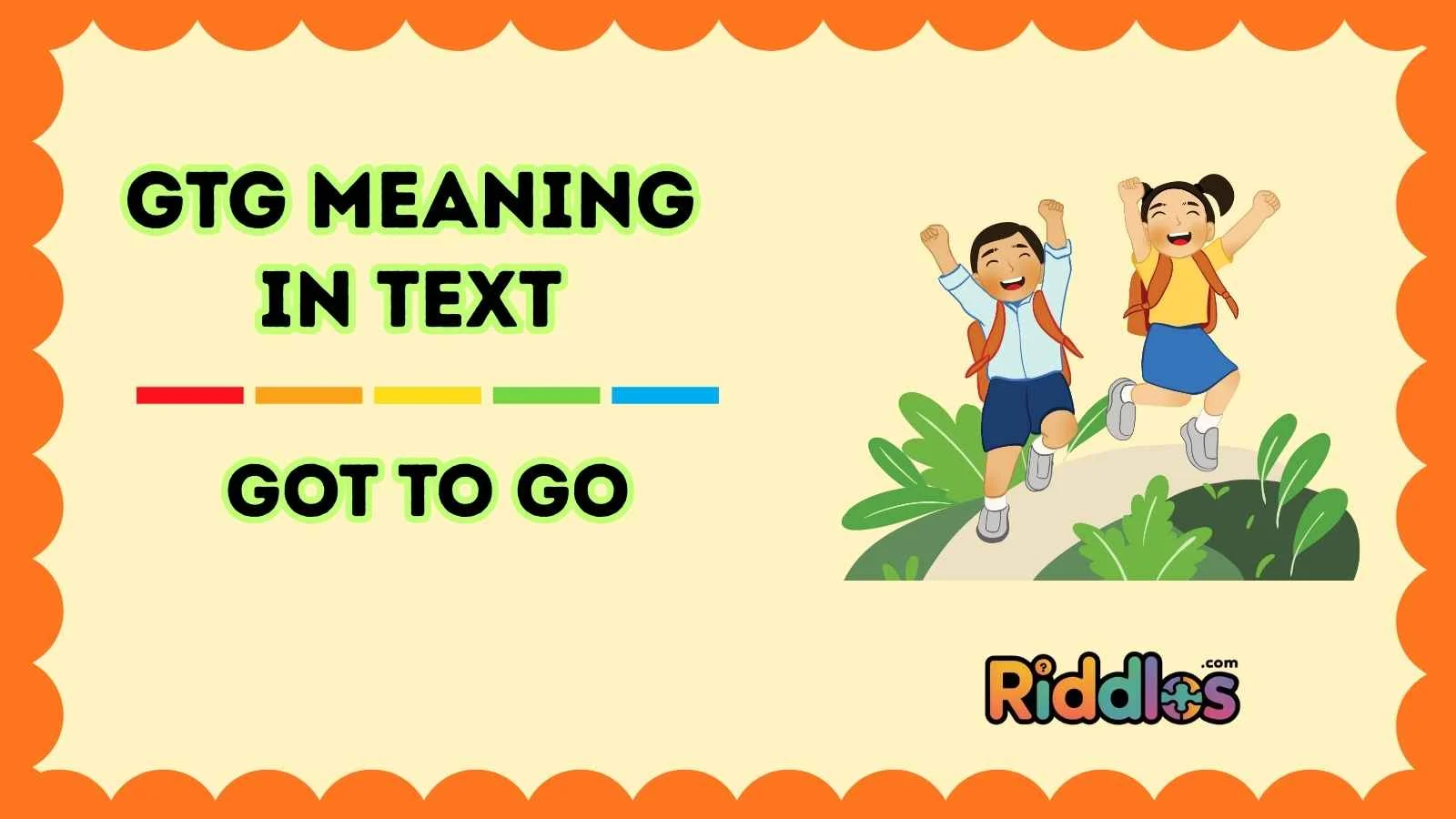
GTG Meaning: Got to Go
This is the most common usage.
GTG = Got to go
People use it to signal they’re leaving a conversation. It can mean:
- They’re busy
- Something urgent came up
- They’re ending the chat politely
Example:
“This was fun, but I GTG. Talk later!”
The tone is usually neutral or friendly. It’s not meant to be harsh.
GTG Meaning: Good to Go
This version flips the meaning completely.
GTG = Good to go
Here, it signals readiness or approval.
Example:
“The files are uploaded and checked. We’re GTG.”
This usage is common in:
- Work chats
- Gaming
- Planning conversations
Same letters. Totally different intent.
GTG Meaning Depends on Context
Context is everything with GTG. The same message can change meaning based on:
- Timing
- Platform
- Relationship
- Conversation flow
When GTG Means “Got to Go”
- At the end of a conversation
- After small talk
- During casual chats
- In dating apps as an exit line
When GTG Means “Good to Go”
- During planning
- Before starting an activity
- In team chats
- In professional settings
Rule of thumb:
If someone says GTG at the end of a sentence, they’re probably leaving.
If they say it mid-conversation, they’re likely confirming readiness.
Real-Life Examples of GTG in Text Conversations
Seeing GTG in action makes it easier to understand.
Casual Texting Examples
- “Dinner was great. GTG now.”
- “I’m about to head out. GTG!”
- “Phone’s dying, GTG.”
Friendly Group Chat
- “I’ll catch up later, GTG fam.”
- “This convo is wild 😂 but GTG.”
Work Chat Example
- “Everything’s reviewed. GTG for launch.”
- “Meeting done. GTG to the next call.”
Dating App Example
- “I had fun chatting, but GTG. Talk soon?”
Tone matters. Adding emojis or follow-up phrases softens the message.
How GTG Is Used Across Platforms
GTG adapts to where people talk. Each platform shapes how it feels.
GTG Meaning in Text Messages
Texting is casual by nature. GTG works well here.
- Short and polite
- Signals a clean exit
- Often paired with “talk later”
GTG on Social Media and DMs
Used in:
- Instagram DMs
- Snapchat
- Facebook Messenger
In DMs, GTG often includes emojis to avoid sounding cold.
Example:
“Loved this convo 💙 GTG for now!”
GTG Meaning in Gaming
Gaming popularized the “good to go” meaning.
Common uses:
- Ready checks
- Match confirmations
- Team coordination
Example:
“Mic works, loadout ready, GTG.”
In gaming culture, GTG almost never means leaving.
GTG Meaning in Professional Settings
This is where people hesitate. Should you use GTG at work?
It depends.
Acceptable in:
- Slack
- Teams
- Internal chats
Not ideal in:
- Formal emails
- Client communication
In work chats, GTG usually means approved or ready, not leaving.
GTG in Dating Apps and Online Relationships
GTG shows up a lot in dating conversations. And yes, it can feel loaded.
What GTG Signals in Dating Chats
GTG often means:
- The person is busy
- They want to pause the conversation
- They’re ending politely
Polite Exit vs Abrupt Goodbye
Tone changes everything.
Polite:
“I should GTG, but I’d love to continue later.”
Abrupt:
“GTG.”
Adding warmth avoids confusion.
Red Flags vs Normal Usage
GTG isn’t a red flag on its own. Patterns matter.
| Usage Pattern | Meaning |
|---|---|
| Occasional GTG | Normal |
| Always GTG quickly | Low interest |
| GTG without follow-up | Possibly dismissive |
Context always wins.
The Origins and Evolution of GTG
GTG didn’t appear overnight.
Early Internet Roots
- Originated in chat rooms
- Popularized in IRC and AIM
- Used to exit conversations quickly
SMS Era Influence
Character limits made abbreviations essential. GTG survived because it stayed useful.
Why GTG Still Works Today
- Short
- Clear
- Flexible
- Platform-agnostic
Unlike outdated slang, GTG adapts easily.
Common Misinterpretations and Mistakes
GTG causes confusion when people assume one meaning fits all.
Common Errors
- Assuming GTG always means leaving
- Using GTG in formal emails
- Reading GTG as rude by default
- Overusing GTG in short chats
How to Avoid Misuse
- Look at conversation flow
- Add context words
- Use punctuation wisely
Tip: A simple “talk later” fixes most misunderstandings.
GTG vs Similar Text Abbreviations
GTG often gets confused with other shortcuts. Here’s a clean comparison.
GTG Compared to Other Slang
| Abbreviation | Meaning | Use Case |
|---|---|---|
| GTG | Got to go / Good to go | Exit or readiness |
| BRB | Be right back | Temporary pause |
| TTYL | Talk to you later | Friendly goodbye |
| AFK | Away from keyboard | Gaming or work |
| OMW | On my way | Travel status |
GTG is more final than BRB. It’s less formal than TTYL.
How to Respond When Someone Says GTG
Knowing how to reply keeps conversations smooth.
Casual Responses
- “All good!”
- “Talk later!”
- “Catch you soon.”
Friendly Replies
- “No worries 😊”
- “Have a good one!”
Professional Responses
- “Sounds good.”
- “Thanks. Talk soon.”
Dating-Friendly Replies
- “Okay! Looking forward to next time.”
- “Message me later 😊”
Mirroring tone builds connection.
Is GTG Rude, Offensive, or Disrespectful?
Short answer: No, not inherently.
GTG becomes rude only when:
- Used without context
- Dropped mid-conversation
- Repeated without engagement
Tone Modifiers That Help
- Emojis
- Polite phrases
- Follow-ups
Example:
“GTG, but I enjoyed this chat.”
That one line changes everything.
Is GTG Suitable for Professional Communication?
GTG can work professionally, with limits.
When GTG Is Acceptable at Work
- Internal chats
- Team coordination
- Informal updates
When to Avoid GTG
- Client emails
- Formal reports
- External communication
Better Professional Alternatives
- “Signing off for now”
- “Ready to proceed”
- “Approved and ready”
Clarity beats shorthand in formal contexts.
Regional and Cultural Differences in GTG Usage
GTG works globally, with small nuances.
US vs UK
- US: Common and casual
- UK: Slightly less frequent but understood
Global Usage
- Popular among English speakers worldwide
- Meaning remains consistent
Cultural Expectations
Some cultures expect longer goodbyes.
GTG in Modern Internet Culture
GTG still thrives in digital spaces.
Meme and Caption Usage
People use GTG humorously:
- “Sleep schedule broken, GTG anyway”
- “Brain offline, GTG”
Influence of Gen Z and Millennials
Both generations favor:
- Speed
- Minimalism
- Context-driven slang
GTG fits perfectly.
FAQs:
Does GTG always mean someone is leaving?
No. GTG can also mean “good to go,” especially in work or gaming contexts.
Can GTG be used politely?
Yes. Adding a short follow-up makes it sound friendly and considerate.
Is GTG outdated slang?
No. GTG remains widely used across platforms and age groups.
Can GTG sound passive-aggressive?
It can, if used abruptly. Tone and context determine perception.
Should GTG be used in emails?
It’s best reserved for chats. Emails usually need clearer phrasing.
Final Thoughts on GTG Meaning in Text
GTG is simple. Yet it’s powerful.
Used correctly, it:
- Saves time
- Keeps conversations flowing
- Signals intent clearly
Used poorly, it creates confusion.
The key is context. Read the room. Match the tone. Add warmth when needed. When you do that, GTG becomes a useful tool instead of a texting mystery.