Have you ever been texting a friend, scrolling through social media, or hopping into a gaming chat, only to see someone type GTFO and freeze?
You’re not alone. This little acronym packs a punch, and understanding it can save you from awkward misunderstandings, hurt feelings, or even accidental drama online.
In this guide, you’ll learn exactly what GTFO means, where it comes from, how it’s used, and how to respond when someone throws it your way.
We’ll cover everything from casual jokes to serious dismissals, plus common mistakes people make when interpreting it.
What GTFO Actually Means
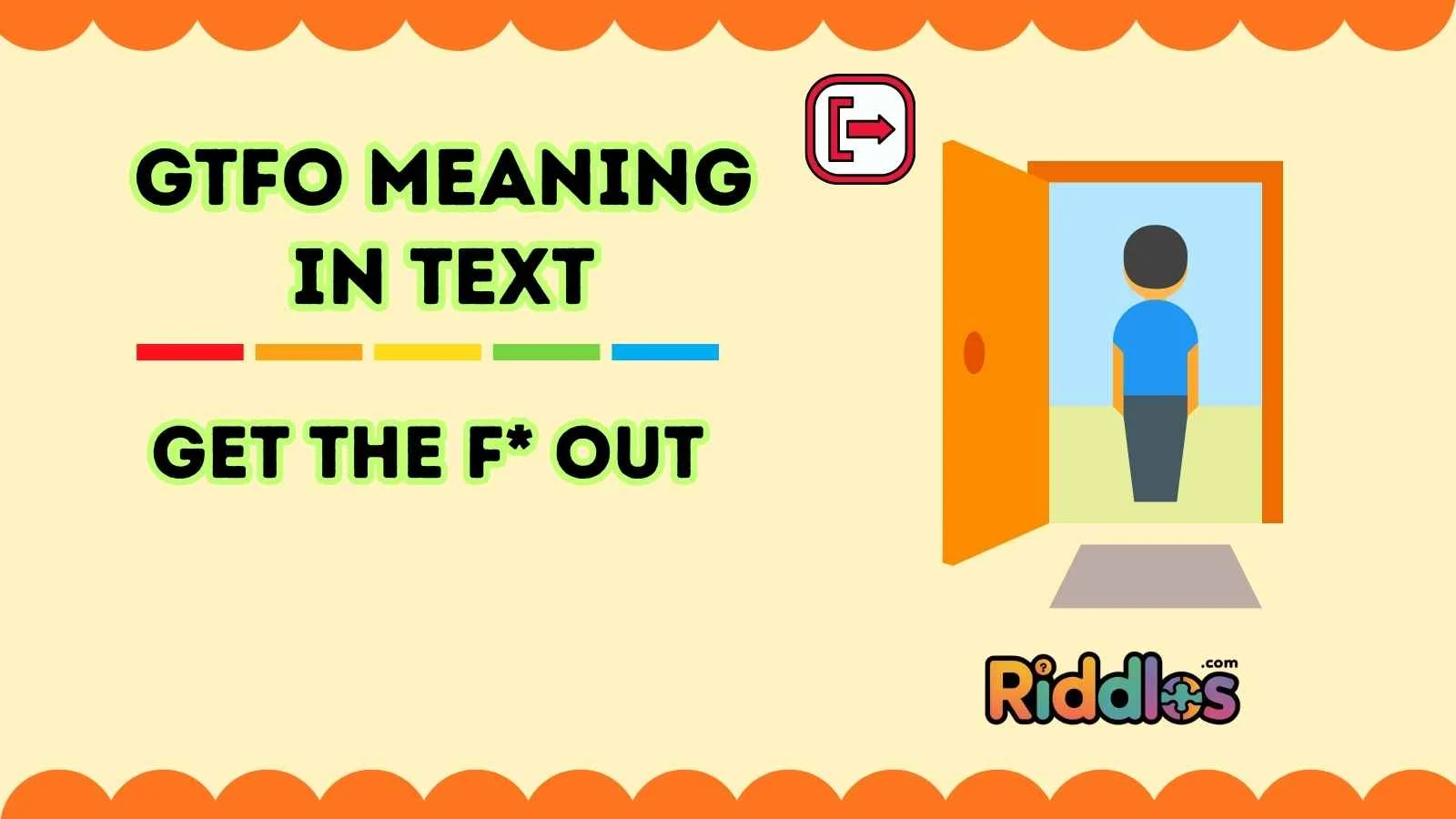
GTFO is short for “Get the F* Out”**. At its core, it’s a way to tell someone to leave, either literally or figuratively.
- Literal usage: Someone is asking you to physically leave a space.
- Figurative usage: It’s often used online to express disbelief, shock, or annoyance.
Tone matters. Depending on context, GTFO can be playful, sarcastic, or extremely harsh.
Examples:
- Playful:
- Friend: “I just ate your leftover pizza.”
- You: “GTFO! That was mine!”
- Serious:
- Online comment: “You’re spreading fake news. GTFO!”
Origin and Cultural Background
GTFO didn’t appear out of nowhere. It has roots in early internet and gaming culture.
- 1990s: Acronyms like GTFO started popping up on IRC chats and message boards.
- 2000s: Gaming communities popularized GTFO in multiplayer lobbies.
- Today: It’s widely used on social media, texting, and forums, often with a lighter, humorous twist.
Interestingly, GTFO evolved alongside other acronyms like WTF, STFU, LOL, and BRB, becoming a staple of online communication.
How GTFO Is Used in Real Conversations
GTFO isn’t just one-size-fits-all. Its meaning shifts depending on the tone, context, and relationship between the people involved.
- Casual texting: Among friends, GTFO can be playful.
- Social media posts: Often signals shock or disbelief (“GTFO, no way that happened!”)
- Gaming chats: Usually dismissive or aggressive, telling someone to leave the lobby or game.
| Context | Meaning | Tone | Example |
|---|---|---|---|
| Texting friend | Shock or joke | Playful | “GTFO! You did not just text me that!” |
| Gaming lobby | Leave the game or chat | Aggressive | “GTFO, noobs!” |
| Social media thread | Express disbelief | Sarcastic | “GTFO… that’s impulsive!” |
| Serious argument | Demand to exit conversation | Harsh | “GTFO, I don’t want to talk to you.” |
Example Table: GTFO in Context
GTFO in Different Emotional Contexts
GTFO carries emotional weight. Understanding its subtext is key to avoiding misinterpretation.
- Playful: Among friends, often paired with emojis or laughter.
- Hostile: Used to shut someone down or express real anger.
- Self-directed humor: “I need to GTFO” can be a funny way to admit embarrassment.
- Boundary-setting: When someone says GTFO in anger, it signals a clear boundary.
Common Misunderstandings
Many people misunderstand GTFO because of its intensity and variety of usage.
- Not always hostile: GTFO can be joking.
- Sarcasm vs. anger: The same phrase may be playful for one person and offensive for another.
- Generational differences: Younger users often use it casually; older generations may perceive it as rudeness.
Similar Acronyms and Cleaner Alternatives
There are many acronyms and phrases that share a similar meaning:
- STFU (Shut the F* Up)** – Focuses on silencing someone.
- WTF (What the F*)** – Expresses shock, not dismissal.
- OMG (Oh My God) – Exclamation without dismissive intent.
- Toned-down alternatives: “Leave,” “Go away,” or “Stop it” are safer for professional or polite contexts.
Example Table: Acronym Comparison
| Acronym | Meaning | Usage Context | Tone |
|---|---|---|---|
| GTFO | Get the F*** Out | Chat/Text/Gaming | Aggressive/Playful |
| STFU | Shut the F*** Up | Online arguments | Harsh |
| WTF | What the F*** | Shock/Surprise | Neutral |
| OMG | Oh My God | Surprise | Neutral |
When and How to Respond
Receiving GTFO can feel jarring. How you respond depends on the context and tone.
- Playful: Respond with humor or a comeback.
- Aggressive: Evaluate if engagement is worth it. Sometimes, silence is best.
- Polite assertiveness: “Okay, I’ll step away” maintains dignity without conflict.
Tips for responding:
- Consider relationship context first.
- Mirror tone if joking.
- Avoid escalating arguments.
- Use emojis or GIFs to lighten a playful interaction.
Regional, Cultural, and Age-Based Differences
GTFO’s interpretation shifts across geography, age, and culture.
- US vs. UK: Generally understood similarly, but UK users might soften the tone with humor.
- Gen Z vs. Millennials: Gen Z uses it casually; Millennials may reserve it for more serious dismissal.
- Multilingual communities: Acronym meaning may rely heavily on context; some cultures might avoid explicit language altogether.
GTFO in Online Communities
GTFO thrives in digital spaces.
- Gaming: Often used in competitive settings.
- Reddit & Forums: Express disbelief or shock in threads.
- Group chats: Playful teasing among friends.
- Memes: GTFO is a common punchline in humorous posts or viral content.
Offensive or Explicit Layers
Because GTFO includes an expletive, it can come off as offensive.
- Situations to avoid: Workplace, professional emails, formal discussions.
- Potential risks: Misinterpretation can escalate conflicts or hurt relationships.
- Mitigation: Use tone indicators (like LOL, 😂) for playful contexts, or avoid entirely in serious discussions.
Professional and Formal Settings
Using GTFO in professional contexts is highly discouraged.
- HR professionals advise avoiding profanity in emails, meetings, or chats.
- Even mild joking can be misread as hostile.
- Use alternatives: “Please leave the discussion,” “I’d prefer to pause this conversation,” or “Let’s revisit this later.”
Comparison With Close Terms
GTFO overlaps with similar acronyms, but nuances differ:
- GTFO vs STFU: GTFO dismisses; STFU silences.
- GTFO vs WTF: GTFO is dismissive; WTF is shock or disbelief.
- GTFO vs BYE/FYI/BRB: Less aggressive, more neutral.
Quick Comparison Table
| Term | Meaning | Aggressiveness | Common Usage |
|---|---|---|---|
| GTFO | Get out | High | Chat, Text, Gaming |
| STFU | Shut up | High | Online arguments |
| WTF | What the F*** | Medium | Shock, humor |
| BYE | Goodbye | Low | Neutral conversation |
| BRB | Be right back | Low | Informal chat |
FAQs
Is GTFO always rude?
Not always. It depends on tone and relationship. Among friends, it can be playful.
Can GTFO be funny?
Yes. Many people use it jokingly with friends or memes online.
Is it okay to use GTFO with coworkers?
No. Avoid in professional contexts; it’s considered unprofessional and offensive.
Where do people use GTFO the most?
Texting, social media, gaming chats, and forums are the most common spaces.
What’s a safe alternative to GTFO?
“Leave,” “Go away,” or “Stop it” are polite, non-offensive options.
Conclusion
GTFO is more than a simple acronym. It’s a cultural symbol of communication, with playful, sarcastic, and aggressive uses. Understanding its meaning, tone, and context ensures you use it appropriately and interpret it correctly.
Whether you’re texting friends, navigating social media, or participating in gaming chats, knowing when to use GTFO—and when to avoid it—can save you from misunderstandings, maintain healthy boundaries, and even inject humor into digital conversations.